"Models of platform regulation and HRC output on national regulation" - UN Human Rights Council side event - 18 June 2026

On 18 June 2026, the Research Chair on Online Content Moderation co-organised, with the Geneva Human Rights Hub, a side-event to the 62nd session of the UN Human Rights Council in Geneva. The event focused on models of platform regulation, seeking to analyse the various regulatory models that have emerged in different parts of the world, and to link them to the output and interpretive guidance developed by the UN Human Rights Council over the past decade. The event took place in Room VII, Palais des Nations, in Geneva, and was an opportunity to share some of the Chair’s research findings with a wider community, comprising state representatives, international organisations, and civil society organisations.
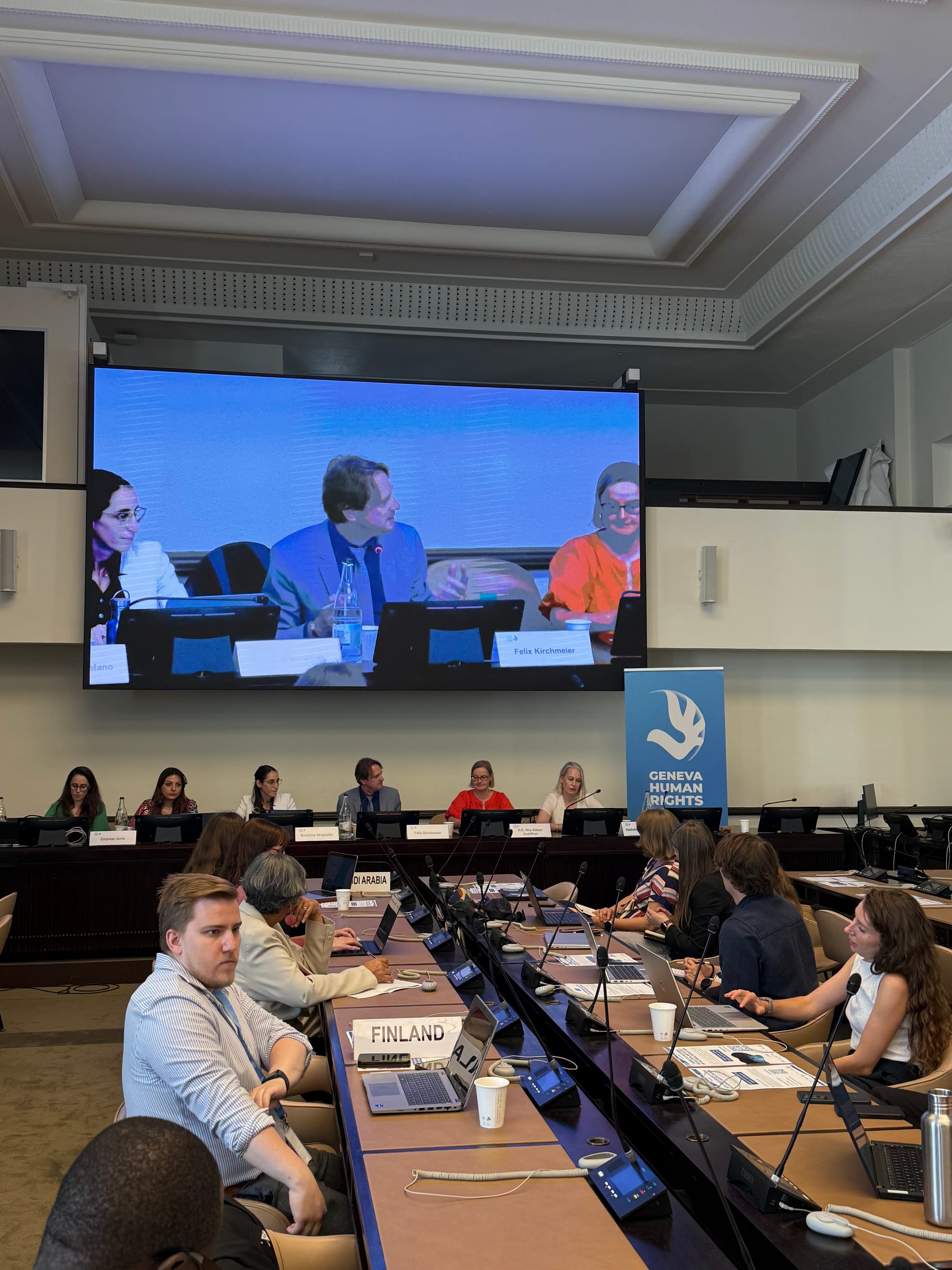
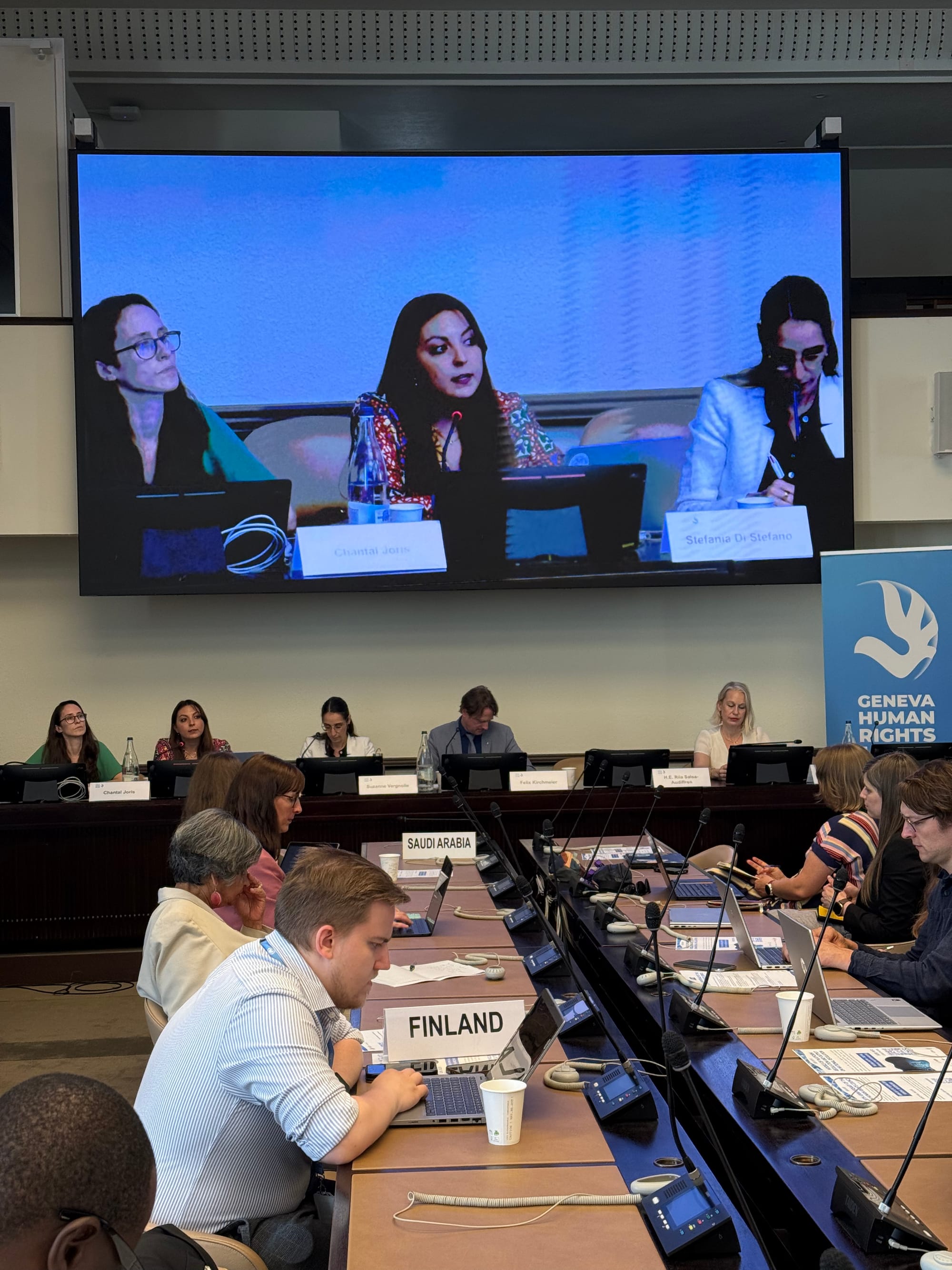
The event was opened by H.E. Riia Salsa-Audiffren, Permanent Representative of Estonia to the UN in Geneva. The panel discussion, moderated by Felix Kirchmeier, Director of the Geneva Human Rights Hub, featured interventions by Nathalie Stadelmann, Human Rights Officer for the UN Office of the High Commissioner for Human Rights, Chantal Joris, Interim Head of Law and Policy at ARTICLE 19, and Dr. Stefania Di Stefano and Dr. Suzanne Vergnolle, representing the Chair.
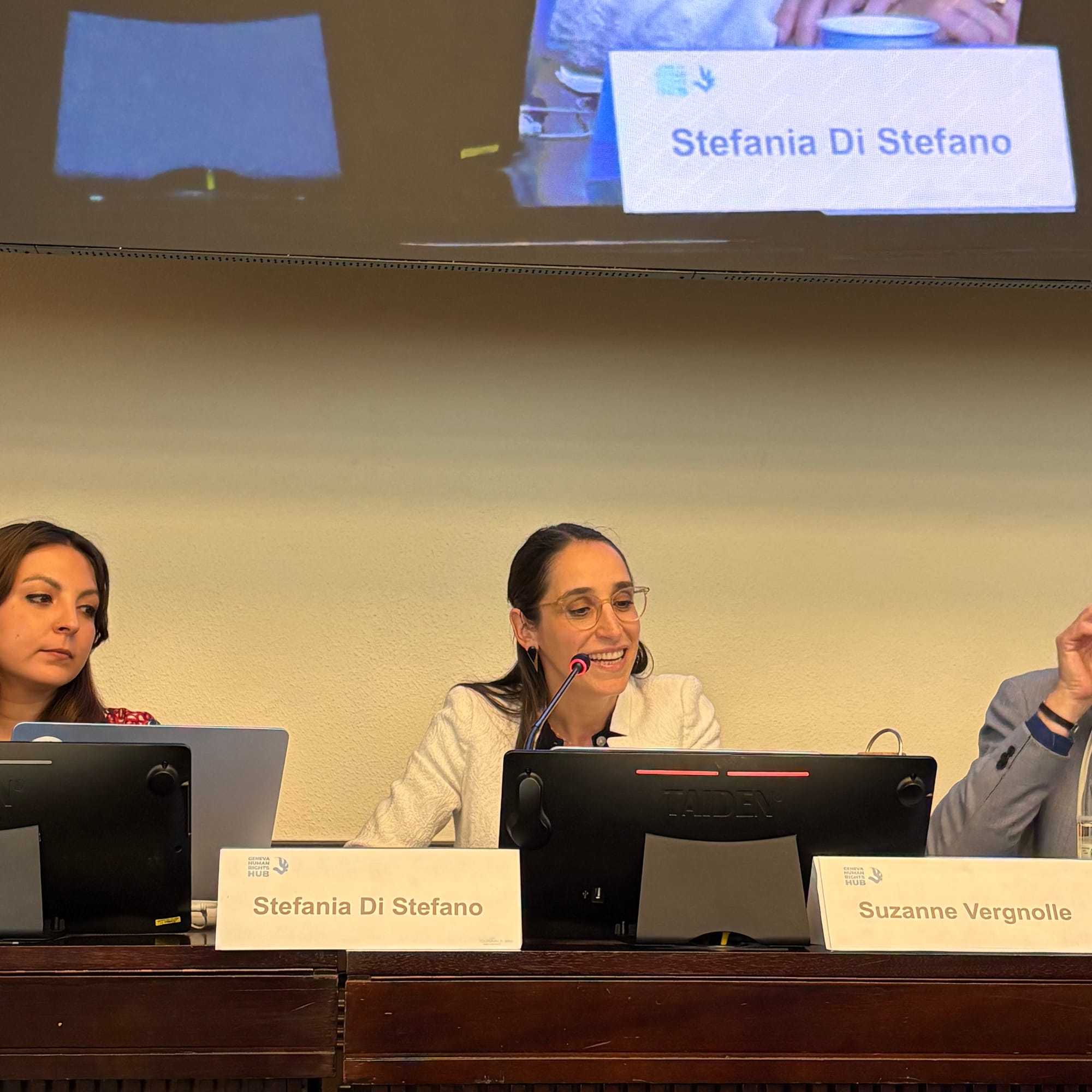
In their presentation, Suzanne Vergnolle and Stefania Di Stefano focused on the role of the EU Digital Services Act within this wider regulatory architecture. Dr. Vergnolle drew attention to the ambitious objectives of the DSA, underscoring how, despite the attacks aimed at the regulation, framed as a censorship tool by the US government, this framework in fact empowers users and protects their fundamental rights. She also emphasised how the full potential of the DSA is yet to be deployed and seen, and the regulation will require more time to fully function as intended. Despite these current shortcomings, the DSA is also serving as a blueprint for similar initiatives, such as recent decrees in Brazil or the Swiss LPCom proposal.
Dr. Di Stefano continued the presentation by linking the DSA to the international human rights framework. In particular, she delved into the relevance of the UNGPs (UN Guiding Principles for Business and Human Rights) for regulatory initiatives targeting platform governance, taking the DSA as an example. She illustrated how the UNGPs are a central framework for understanding the implementation of the DSA. She also explored how the systemic risks framework created by the DSA should still be interpreted in a manner that is compliant with these principles, offering concrete examples of every systemic risk category enshrined in the DSA can be traced back to a form of adverse human right impact. She concluded by recommending that existing frameworks should be interpreted and applied in a manner that is consistent with the UNGPs, and that any future initiative is strongly rooted in the UNGPs and the interpretive guidance offered by the HRC and its mechanisms.
This event was the perfect opportunity to mark the conclusion of the Chair’s activities, with the hope that our research contributes to inform regulatory approaches regionally and worldwide so as to ensure these regulations effectively foster a safer digital space and protect users’ human rights.
For a detailed description of the event, you can find the concept note below.
As digital technologies continue to reshape societies, their regulation has emerged as a key priority. Different regulatory initiatives are currently emerging at the international, regional and national levels with the aim of strengthening the digital rights of users. The United Nations Human Rights Council (HRC) has already begun to address the human rights implications of new and emerging digital technologies, notably through resolution 53/29 and reports such as the 'Practical application of the Guiding Principles on Business and Human Rights to the activities of technology companies, including activities relating to artificial intelligence' by the Office of the United Nations High Commissioner for Human Rights (OHCHR).
At the regional level, the EU Digital Services Act is serving as a blueprint for similar initiatives globally, an influence often labelled the 'Brussels Effect'. This includes developments such as the bill on communications platforms and search engines (LPCom) put forward by the Swiss Federal Council. The Swiss Federal Council has also developed initiatives like the Digital Self-Determination Network to ensure that technological developments foster innovation while adhering to the fundamental values of a democratic society.
This side event asks to what extent these efforts can effectively protect human rights in the digital sphere and how to ensure that regulatory initiatives comply with the obligations of states to protect human rights.
Objectives
This discussion aims to:
- Examine and compare different models of platform regulation.
- Highlight existing challenges and opportunities for ensuring effective human rights protection in the digital sphere.
- Put forward key recommendations for states and other actors on how to regulate online platforms.
The event is organised as part of the Geneva Human Rights Hub's Annual Conference "HRC@20", dedicated to the 20th anniversary of the establishment of the United Nations Human Rights Council.
The side event will be preceded by an expert roundtable on the role of the UN Human Rights Council on "Interpretation and Guidance in the Digital Age", to which the Chair will also contribute.
