Hack the DSA: a collaborative day in to improve digital transparency


On 3rd October, the Chair on Online Content Moderation brought together dozens of experts on the Digital Services Act (DSA) for the “Hack the DSA” workshop. What was their challenge? To dive into the analysis of the reports and data published within the framework of the DSA and decipher their content. Their objective? To formulate concrete recommendations to improve the accessibility of content moderation practices and increase the accountability of online platforms.
Why this workshop?
The DSA introduces more than 80 transparency obligations which involve the publication of a variety of documents: transparency reports, reports on systemic risks, audit reports, reports by national authorities or out-of-court dispute settlement bodies… This wealth of information represents a significant step forward for better understanding online platforms’ practices, in particular with respect to content moderation. However, it also raises other challenges: how can we render the data emerging from these reports comparable, comprehensible and truly useful?
It is precisely against this backdrop that the workshop was organised: the aim was to collectively explore these documents in order to understand and analyse their content, compare their different approaches and methodologies, identify good and bad practices, and then formulate recommendations.
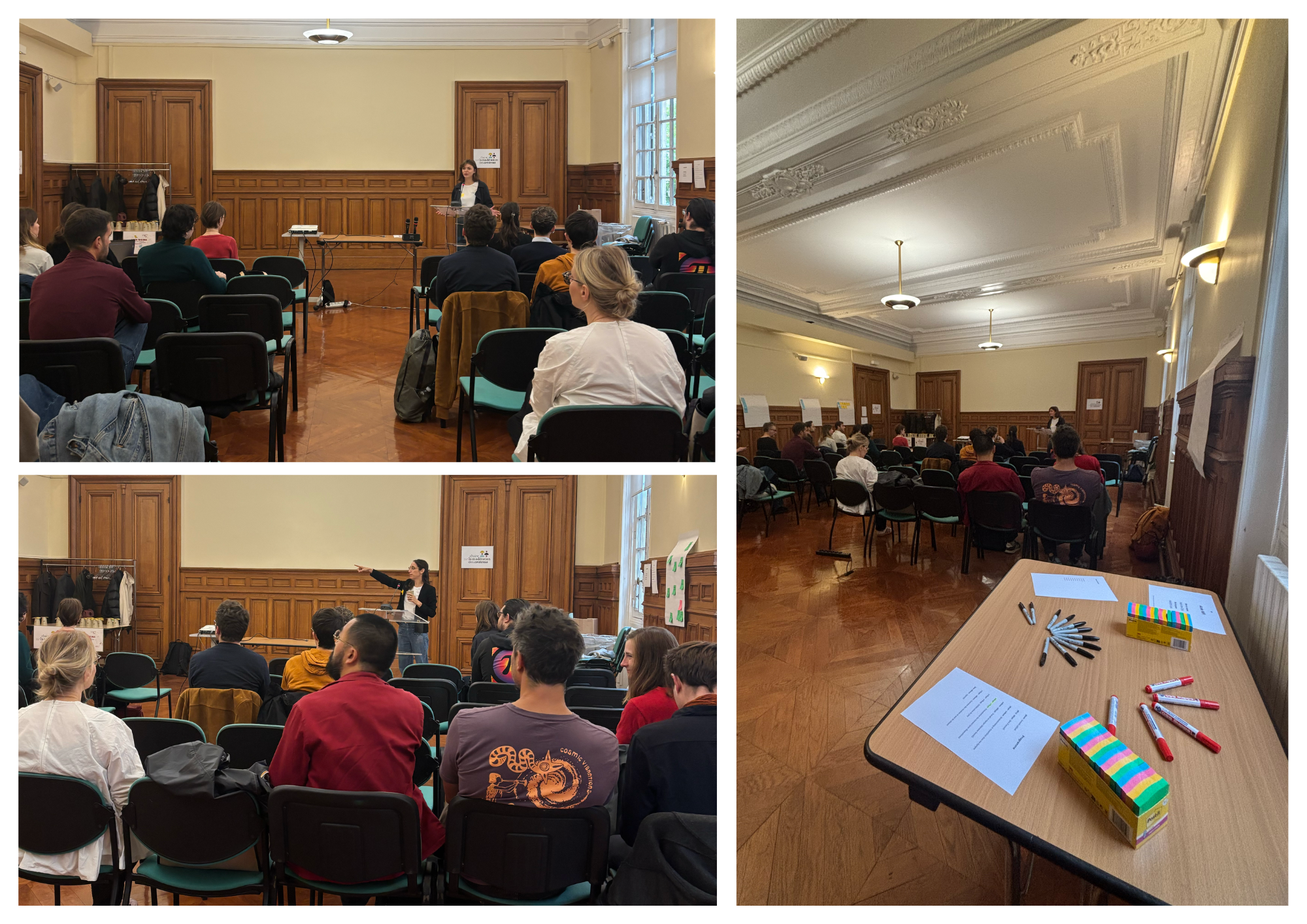
The strong turnout was one of the day's highlights, with around thirty people travelling from different European countries to attend. Moreover, the diversity of the profiles being represented (researchers, lawyers, representatives from civil society, national authorities, and digital technology experts) contributed to mutual learning and the sharing of different perspectives. This interdisciplinary diversity was a real catalyst for creativity and mutual learning, and it was welcomed by all participants.
This initiative is also in line with the recommendations of the report ‘Putting Collective Intelligence to the Enforcement of the DSA’, which encourages collaboration with civil society, particularly through the organisation of collaborative events.
A day marked by collaboration
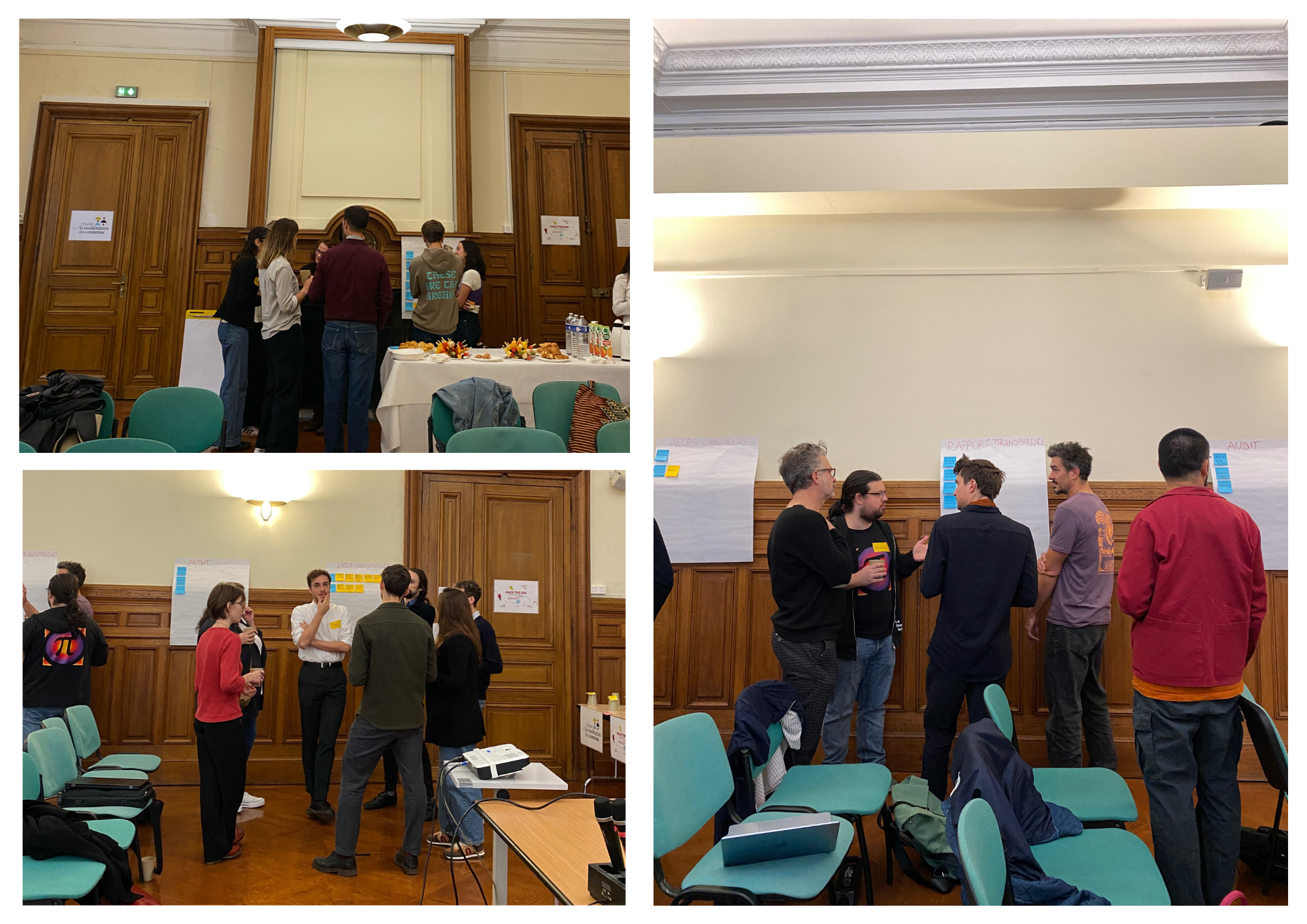
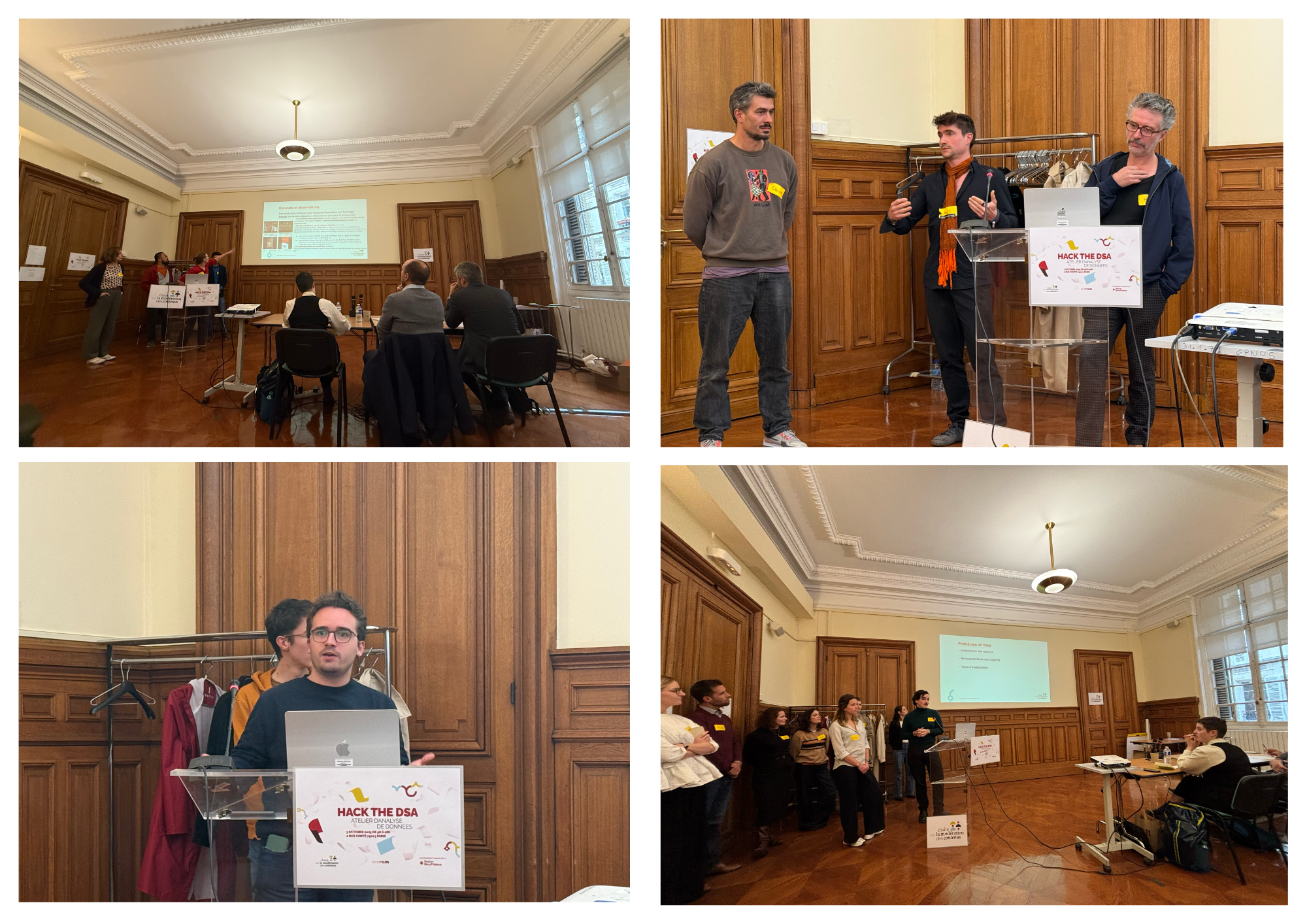
Drawing from the format of hackathons, the workshop was designed to encourage collective thinking and the sharing of knowledge within small groups. The day began with a joint brainstorming session where participants had the opportunity to meet, exchange ideas and share their thoughts before choosing their topics and forming their teams. Participants then worked in teams on different topics in an atmosphere that was both focused and enthusiastic. At the end of the day, the teams presented the results of their work to a jury composed of Camille Grenier (Executive Director of the Forum on Information and Democracy), Lucie Ronfaut (journalist and author specialising in new technologies) and Sébastien Lécou (Deputy Director at Arcom).
Summary of key findings and recommendations: lessons learned from the day
The participants were divided into five teams, each of which dealt with a different aspect of the DSA:
- inter-transparency (i.e. a cross-analysis of different transparency reports),
- data archiving,
- online political advertising,
- reports on systemic risks,
- and the role of national authorities.
The main findings and recommendations of the five teams
Inter-transparency: what if reports finally spoke the same language?
- Findings: the wealth of reports and data produced by the DSA are scattered and too heterogeneous.
- Issue: these discrepancies make it impossible to cross-reference, compare and analyse data from different platforms and stakeholders.
- Suggestions and recommendations: create a collaborative database based on minimal standardisation and shared metrics that would facilitate cross-platform data analysis, improve data consistency, and promote cooperation between stakeholders.
Report archiving: a long-term memory of the DSA
- Findings: access to platform reports is tedious and unreliable, as these documents are often published in unsuitable formats that are difficult to exploit or cannot be easily compared over time.
- Issue: without permanent archiving, the transparency promise of the DSA remains partial and fragile.
- Suggestions and recommendations: archive platform reports and notify changes over time. Platforms must publish reports in a machine-readable format; open archives must be created to guarantee integrity, traceability and comparability; and regulators and civil society must be encouraged to enrich these shared databases.
This team presented the archiving of systemic risk reports using the Open Terms Archive tool (see our Lunch & Learn with Open Terms Archive).
How can we put an end to the lack of transparency in political advertising?
- Findings: platforms such as Meta and Google remove or wrongly label content that relates to political issues
- Issue: there is a lack of transparency and traceability with regard to online political advertising.
- Suggestions and recommendations: Strengthen archiving and improve the labelling of such advertising at all levels. Civil society must archive and report mislabelled content as much as possible. Regulators must redefine clear labelling criteria that are common to all platforms. Platforms must ensure compliance with the EU’s Transparency and Targeting of Political Advertising (TTPA) regulation.
Systemic risk reports: the need for greater clarity and less jargon
- Findings: most reports published by very large services remain opaque, self-congratulatory and difficult to compare, despite a few isolated efforts.
- Issue: this lack of clarity, transparency and standardisation weakens the scope and relevance of these reports, which are nevertheless essential for assessing systemic risks on large digital services.
- Suggestions and recommendations: improve the content and format of these documents. To this end, the structure and categories of the reports must be harmonised and the wording simplified. More source data should be published, and details of the assessment methods used should be included in the reports. The European Commission must also be encouraged to be more active in monitoring services and penalising breaches.
National regulators: harmonisation for better regulation
- Findings: Digital Services Coordinators (DSCs) do not all have the same resources or level of expertise in the different Member States.
- Issue: These differences between regulators lead to a lack of consistency, coordination and oversight of large platforms at the European level.
- Suggestions and recommendations: harmonise the functioning of DSCs, create a European register of trusted flaggers to guarantee their independence, and introduce public monitoring of complaints for greater transparency. Set up a ‘DSA Bug Bounty’ programme, inspired by cybersecurity practices, to make the DSA more participatory and effective.
Following the teams’ detailed presentations, the jury commended all of the projects. The jury awarded the first place to the group working on inter-transparency, the second place to the team that archived reports on systemic risks, and third place to the team focusing on online political advertising. The jury noted the high quality of work produced in just one day, emphasising how valuable and useful the results of all the teams were for the entire community.
What now?
The “Hack the DSA” workshop illustrated how a variety of actors can collaborate effectively to make the data and reports published under the DSA intelligible. By pooling their expertise, participants succeeded in developing a critical and collective reading of the implementation of this text. The wide range of topics covered confirms the importance and usefulness of this type of event and highlights the many areas that still need to be analysed in relation to the implementation of the regulation. For future editions, it might be interesting to focus efforts on a more specific theme to explore certain issues in greater depth. The event inspired participants and, we hope, marked the beginning of enhanced cooperation between researchers, regulators and civil society.
For further insights, you can find our complementary analyses on Village de la Justice, where we discuss "Hack the DSA" as a model for collaborative compliance workshops; and on the Verfassungsblog, which details the four actionable ways identified during the day to fully exploit the DSA transparency potential.