The 2026 UNESCO International Conference on Digital Platform Governance 2026 - "Two years of the Digital Services Act - What have we learned?"

On 11-13 February 2026, Stefania Di Stefano, postdoctoral researcher at the Chair on Online Content Moderation, participated at the International Conference on Digital Platform Governance 2026, which took place at the University of Pretoria, South Africa.
The event was organized with the support of UNESCO, the African Communication Regulation Authorities Network (ACRAN), the Francophone Network of Media Regulators (REFRAM), the I4T Knowledge Network, and the European Union, and co-hosted by the Information, Communication, Technologies and Media Regulators Forum of South Africa and Social Media 4 Peace South Africa (SM4PSA),
The conference, at its second edition, brought together media and communication regulators, governments, digital platforms, civil society, academia, as well as international and regional organizations from all regions to advance human rights–based and multistakeholder approaches to digital governance, and assess progress in the implementation of the UNESCO Guidelines for the Governance of Digital Platforms.
The conference featured public plenaries as well as side events, and included regional perspectives, and thematic discussions with the aim of fostering multistakeholder collaboration around the topic of freedom of expression and information integrity online.
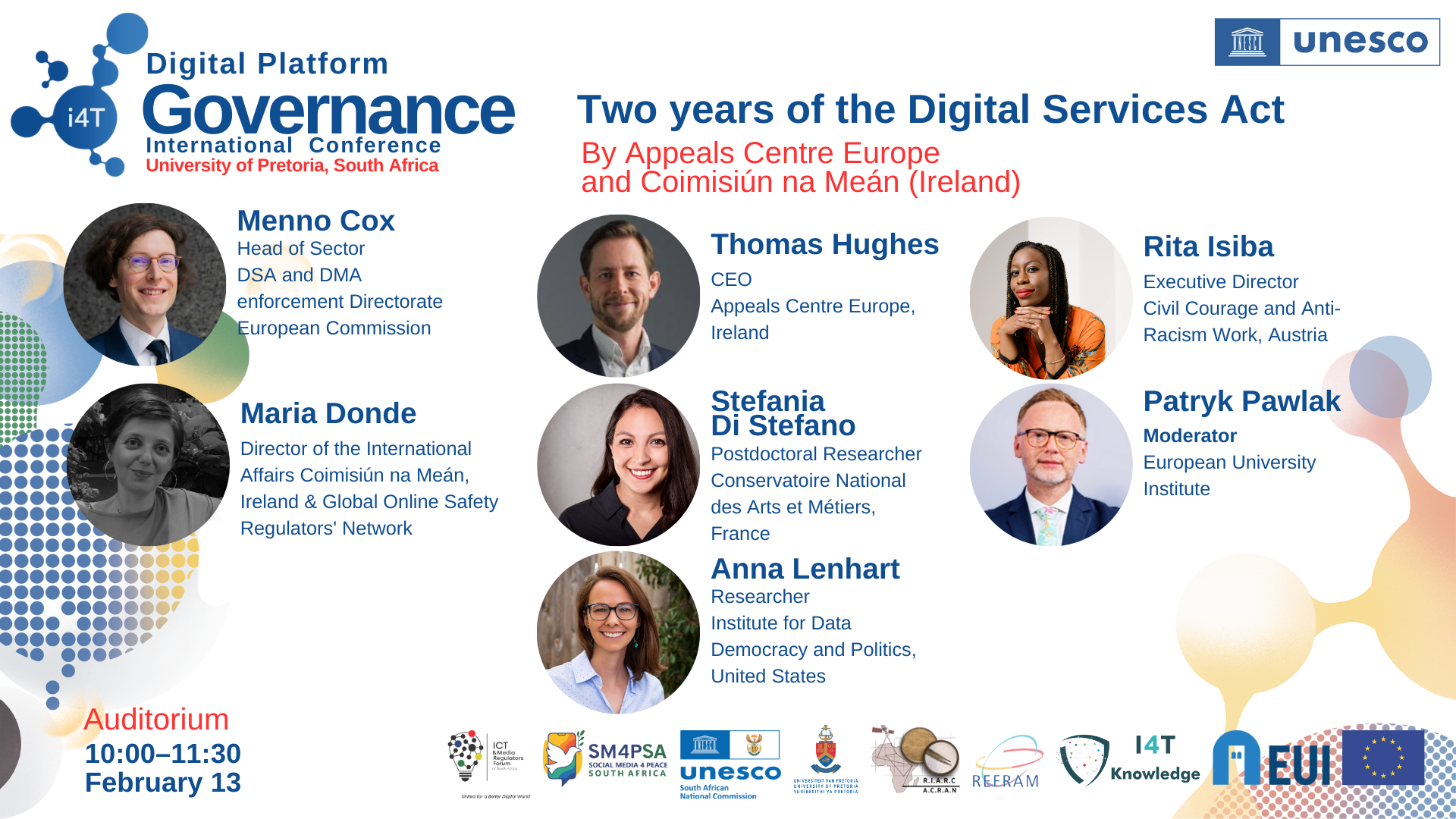
Dr. Di Stefano intervened during the panel “Two years of the Digital Services Act – What have we learned?”. The panel, organised by the Appeals Centre Europe and Coimisiún na Meán (the Irish Digital Services Coordinator) brought together different stakeholders to discuss learnings from their respective perspectives about the DSA ecosystem, encompassing out-of-court dispute settlement, trusted flagging, systemic risk assessment and mitigation, and data access and scrutiny. Alongside Dr. Di Stefano, the panel featured Menno Cox (European Commission), Maria Donde (Coimisiún na Meán), Rita Isiba (ZARA - Zivilcourage und Anti-Rassismus-Arbeit), Thomas Hughes (Appeals Centre), Anna Lenhart (Institute for Data, Democracy & Politics), masterfully moderated by Patryk Pawlak (European University Institute).
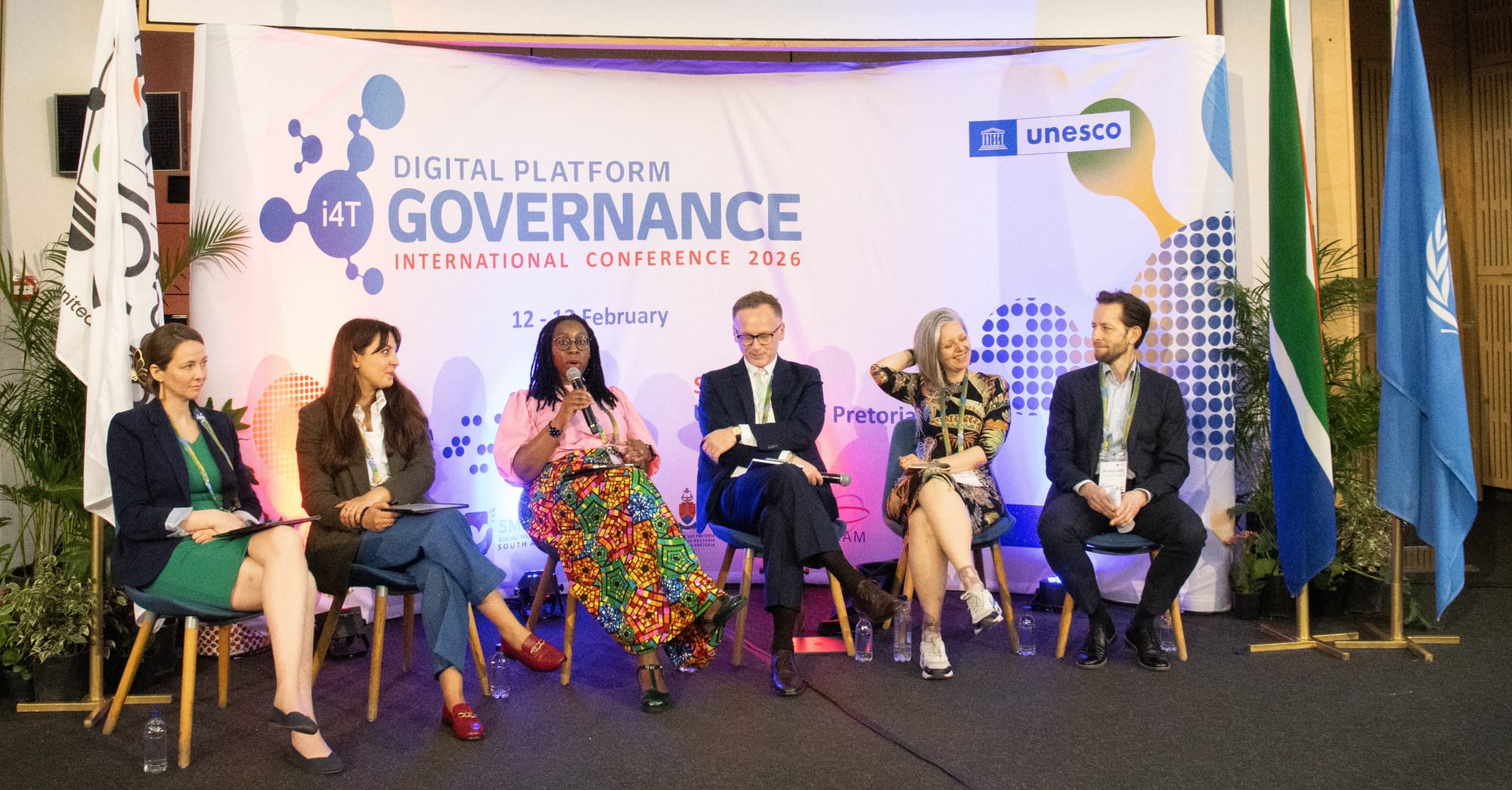
Drawing from their experiences, each panellist contributed to a multifaceted assessment of the wider stakeholder network created by the DSA, evaluating its successes and how it can be strengthened in the future. Dr. Di Stefano’s contribution exposed how the current implementation of the systemic risks framework established by the DSA is currently failing to deliver, as online platforms are implementing their obligations only superficially, neglecting the substance of the exercise. She emphasised that for the framework to be successful, it must not be reduced to a mere compliance exercise; rather, it must adopt a socio-technical approach that considers the social, political, and cultural impacts of online platforms.
For a detailed analysis on the current shortcomings of the DSA systemic risks framework, see our blogpost on Verfassungsblog