The DSA and Platform Regulation Conference: a community of “rebels” conveyed in Amsterdam


On 16-17 February 2026 - for the second anniversary of the DSA’s entry into force - the DSA Observatory hosted the DSA and Platform Regulation Conference at the University of Amsterdam.
A diverse and growing ecosystem
As Martin Husovec noted in the opening panel, it takes a “rebel spirit” to work in the platform regulation field, as it constantly requires the ability to maintain clarity when the world seems to be losing its mind.
By bringing together this “rebel” community for two days of thought-provoking and lively discussions, the DSA Conference successfully managed to offer clarity to the many debates around platform governance, as well as the different layers of issues that emerge in this field. The Conference, in fact, featured no less than 28 panels, over 100 accepted papers, around 200 participants fuelled by at least 1,000 cups of coffee, all of it flawlessly brought together by the DSA Observatory team.
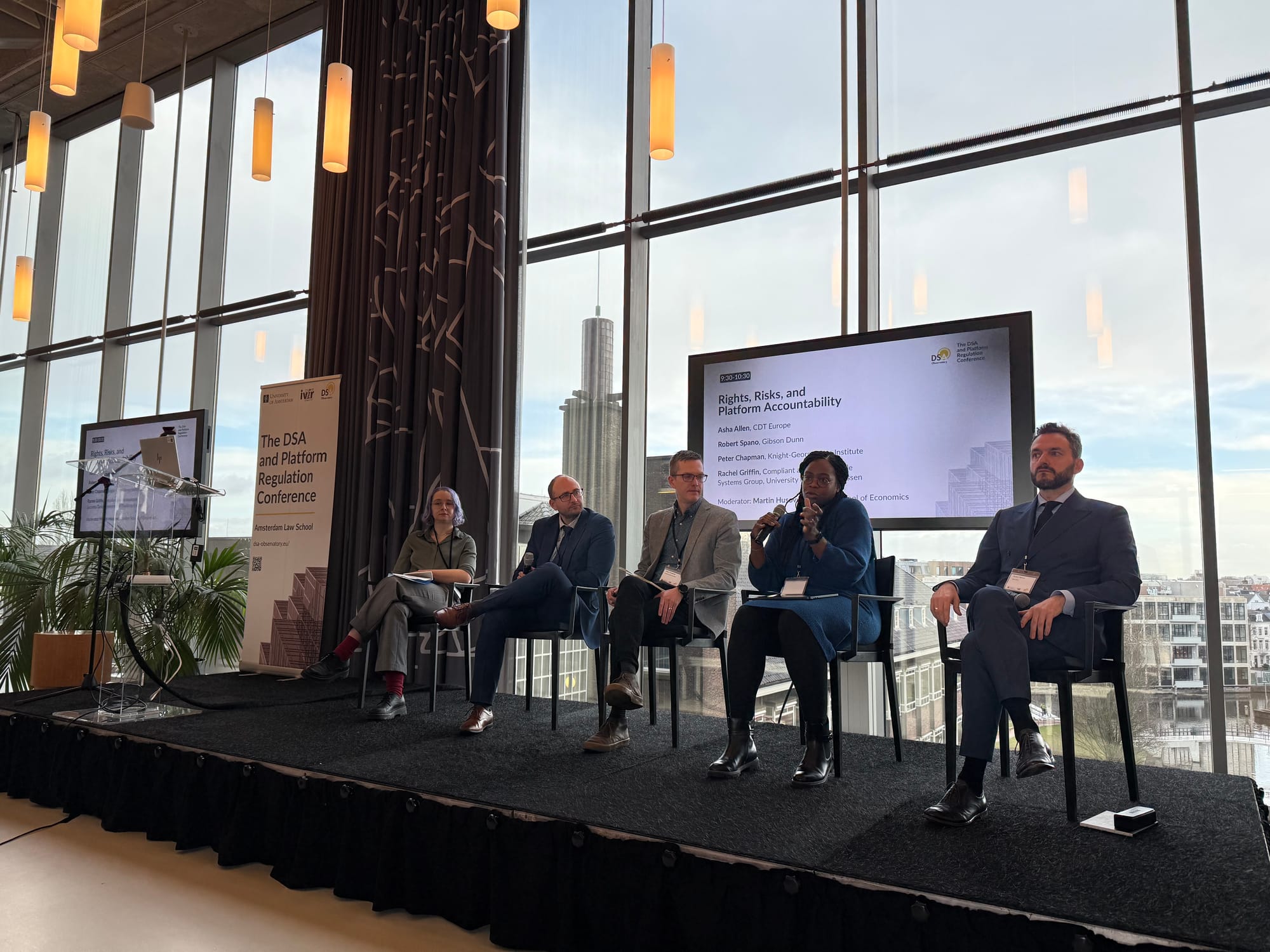
The event brought together a remarkably diverse group of stakeholders. With a format mixing plenary sessions with panels discussions as well as breaks allowing informal conversations, the Conference provided a platform to learn from and with the entire ecosystem: academics, regulators (European Commission and digital services coordinators), trusted flaggers, platforms, non-governmental organizations (NGOs), out-of-court dispute settlement bodies, and…even a 4-month-old baby who followed discreetly the vivid discussions!
The team of the Chair of Online Content Moderation was able to contribute notably with two presentations:
- Stefania Di Stefano participated in the panel Rights, Risks & Rule of Law, where she presented her current research on the DSA’s systemic risks framework and its role in ensuring effective human rights protection online.
- Suzanne Vergnolle spoke on the Multistakeholder Governance panel to present our ‘Hack the DSA’ event. She demonstrated the need to actually read reports to identify concrete recommendations to hold companies accountable.
The DSA at a crossroads: defend, reform or retreat?
This conference took place at a pivotal moment: with two years of implementation under our belt, we are slowly gaining the necessary distance and expertise to form a clearer vision of how the DSA is currently being interpreted and applied, especially with the 2027 revision on the horizon. At the same time, we are witnessing key regulatory and enforcement milestones and their tangible impact in practice. For instance, the release of the first preliminary findings of the Commission’s investigations and the first fine against X on 8 December 2025.
A key takeaway, echoed by Commission’s Director Prabhat Agarwal’s in his keynote speech, is the importance of the DSA as a unique and unprecedent “shield” for European users. While the DSA is not without flaws, it is still infused with ideas of fundamental rights, and its core objective remains the creation of an online environment where human rights are not just mentioned but actively protected.
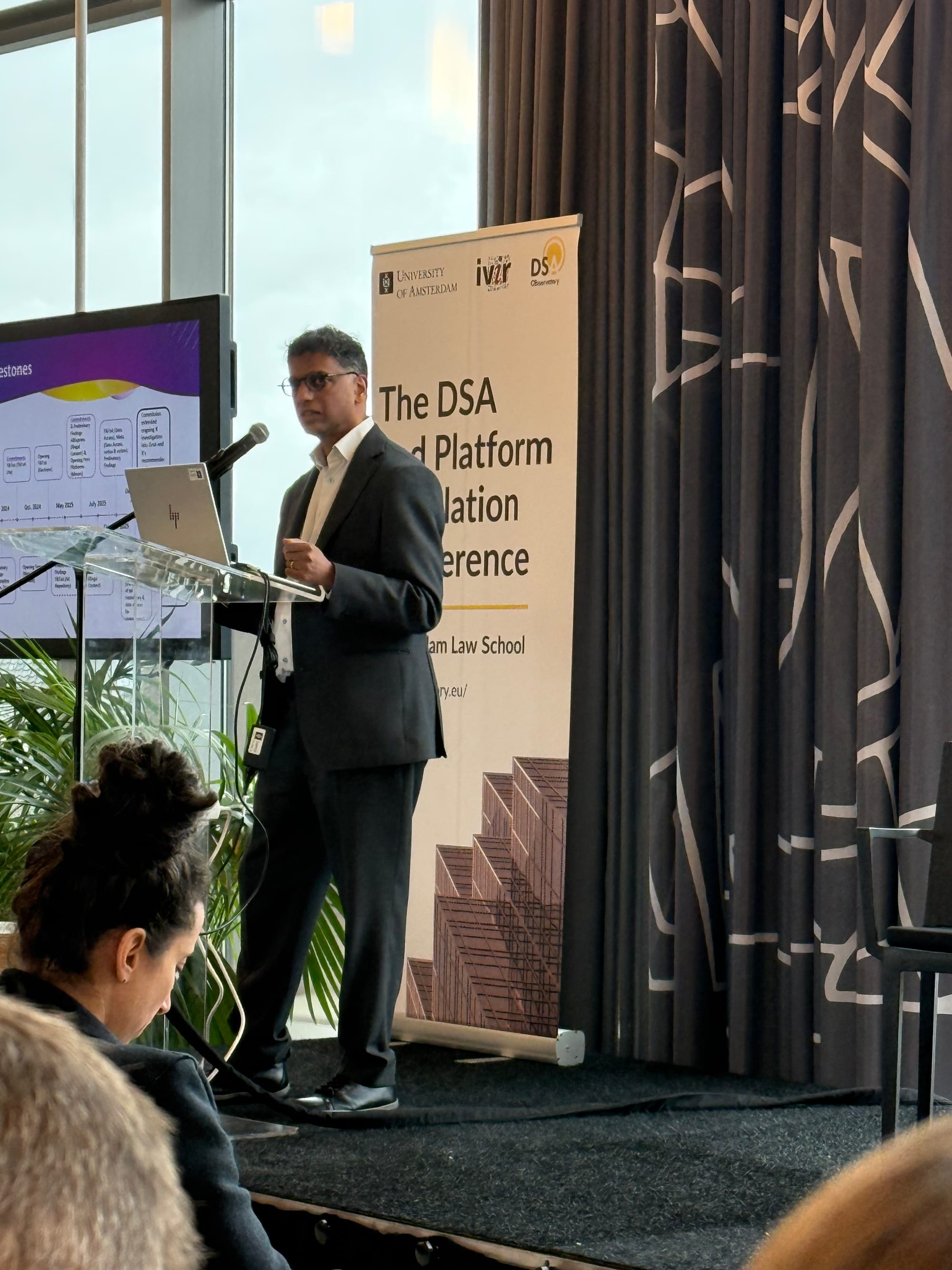
The DSA marks a shift from traditional regulation to a more systemic approach. This is notably reflected in the risk management framework and the move away from a traditional regime of enforcement between authorities and regulated entities. Instead, the DSA creates a complex regulatory ecosystem that involves a multitude of stakeholders.
Strengthening the shield in a hostile global climate
A new paradigm for platform regulation has now emerged through the strategic alliance between Silicon Valley oligarchs and the current Trump administration. This evolving landscape poses a direct challenge not only to the DSA, but also to European digital sovereignty and democratic resilience. As Paddy Leerssen explored in his keynote, Who Owns the Platforms?, corporate governance structures within major tech companies are far from neutral. Governance models matter. We are currently observing a growing politicisation of platform governance, particularly within companies such as Meta and X. A few individuals can take decisions that will have concrete implications for how content moderation decisions are shaped.
If you missed this presentation, join us on March 3rd for the 10th Lunch and Learn session!
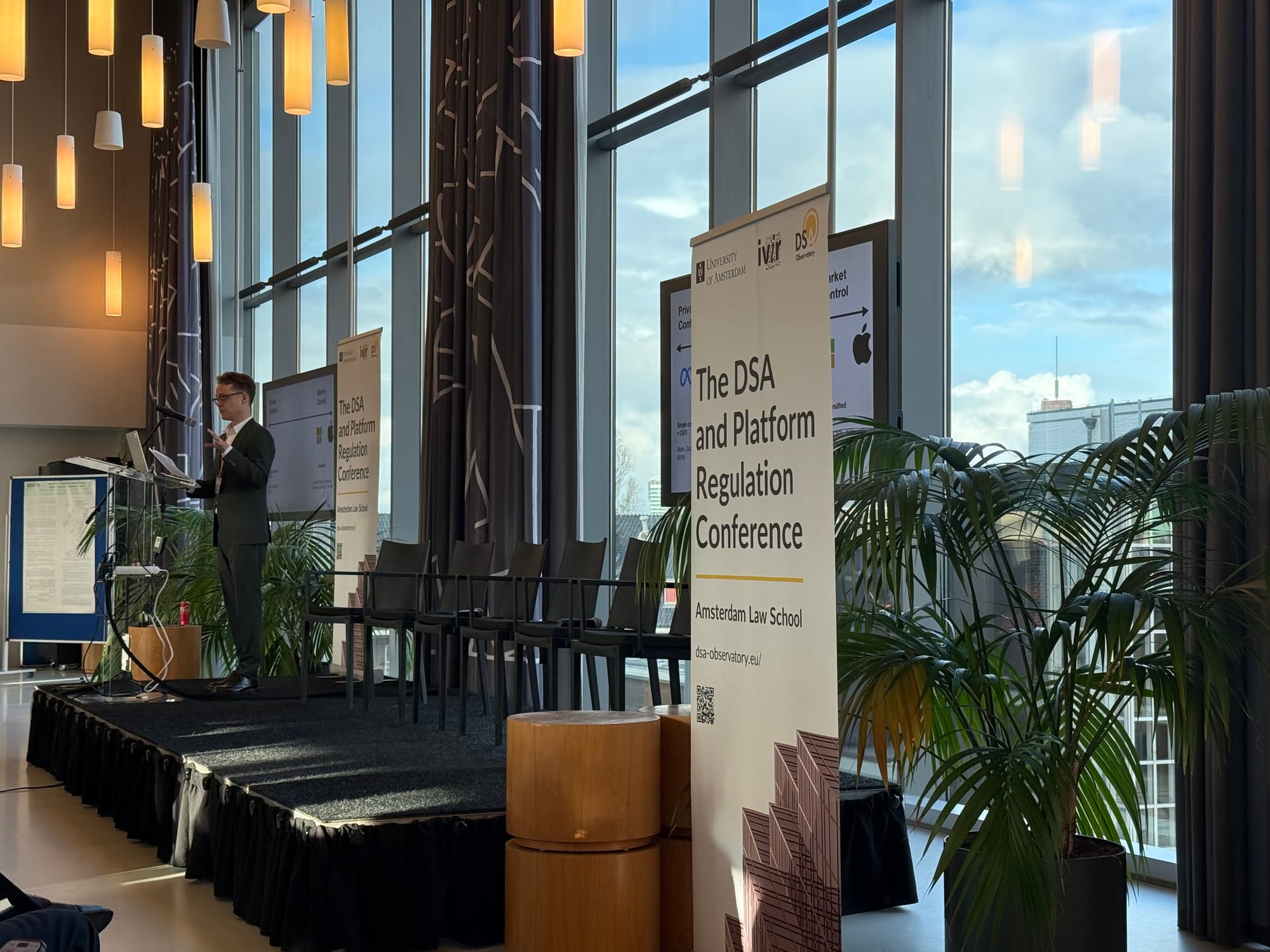
Supporting the DSA despite its flaws and limitations is now more critical than ever in light of the current geopolitical climate. We are facing a period of intense hostility toward European regulations, with certain voices in the United States openly calling for the dismantling of the DSA. The political agenda of the Trump administration has been explicit in this regard: the DSA is being framed not merely as a regulatory instrument, but as a target - one that can be weaponized in broader transatlantic tensions (see our Op-Ed in Le Monde on this development).
Therefore, bringing together the community whose work focuses on platform regulation and governance to discuss, challenge and reflect on the next steps of DSA’s enforcement was not only timely but profoundly needed.
Defending the DSA and getting it right
Defending the DSA does not mean shielding it from criticism. On the contrary, it requires rigorous analysis and a shared commitment to making the framework effective in practice. This common objective is not merely aimed atpreserving the DSA, but at ensuring its success. The conference highlighted several key issues that the 2027 revision will need to address.
- The complexity of the enforcement chain remains a major obstacle. The current regulatory framework resembles a “mille-feuille” of overlapping rules, which creates confusion and slows down effective enforcement. In some cases, identical or very similar risk assessments are required under multiple regulations. Avoiding duplication and ensuring better coordination between legal instruments will be essential to improve efficiency and clarity (see sessions on National implementation & Enforcement; Enforcement and Platform Governance; Private Enforcement).
- While the rules and obligations formally exist, the main challenge lies in their implementation. For example, with respect to online protection of minors, obligations are clearly set out in the legal framework, yet enforcement remains weak and inconsistent. Strengthening compliance mechanisms and ensuring that existing rules are effectively applied should therefore be a priority (see session on Systemic Risks & Protection of Minors).
- Although the DSA formally integrates new actors, such as NGOs and researchers, power remains deeply asymmetrical. In practice, it is largely concentrated in the hands of major platforms and the European Commission. Moreover, there is a critical lack of funding to enable these new stakeholders to effectively play their role as watchdogs. Trusted flaggers represent a promising mechanism to empower users and civil society in the removal of illegal content. However, without adequate financial and institutional support, their impact risks remaining limited. Increased and sustainable funding is therefore necessary to make this tool genuinely effective (see sessions on Access to Data for vetted researchers – Multistakeholder Governance).
- Finally, greater transparency regarding European Commission’s investigations and actions would also help strengthen accountability and trust in the system.
Ultimately, this conference demonstrated that being a ‘rebel’ in this field means holding the platforms and regulators accountable but also defending the rule of law and this unique piece of legislation. Making the DSA work better is not just about enforcement: it is about ensuring that the ‘fundamental rights’ mentioned in the text do not become empty buzzwords, but enforceable realities for every user.
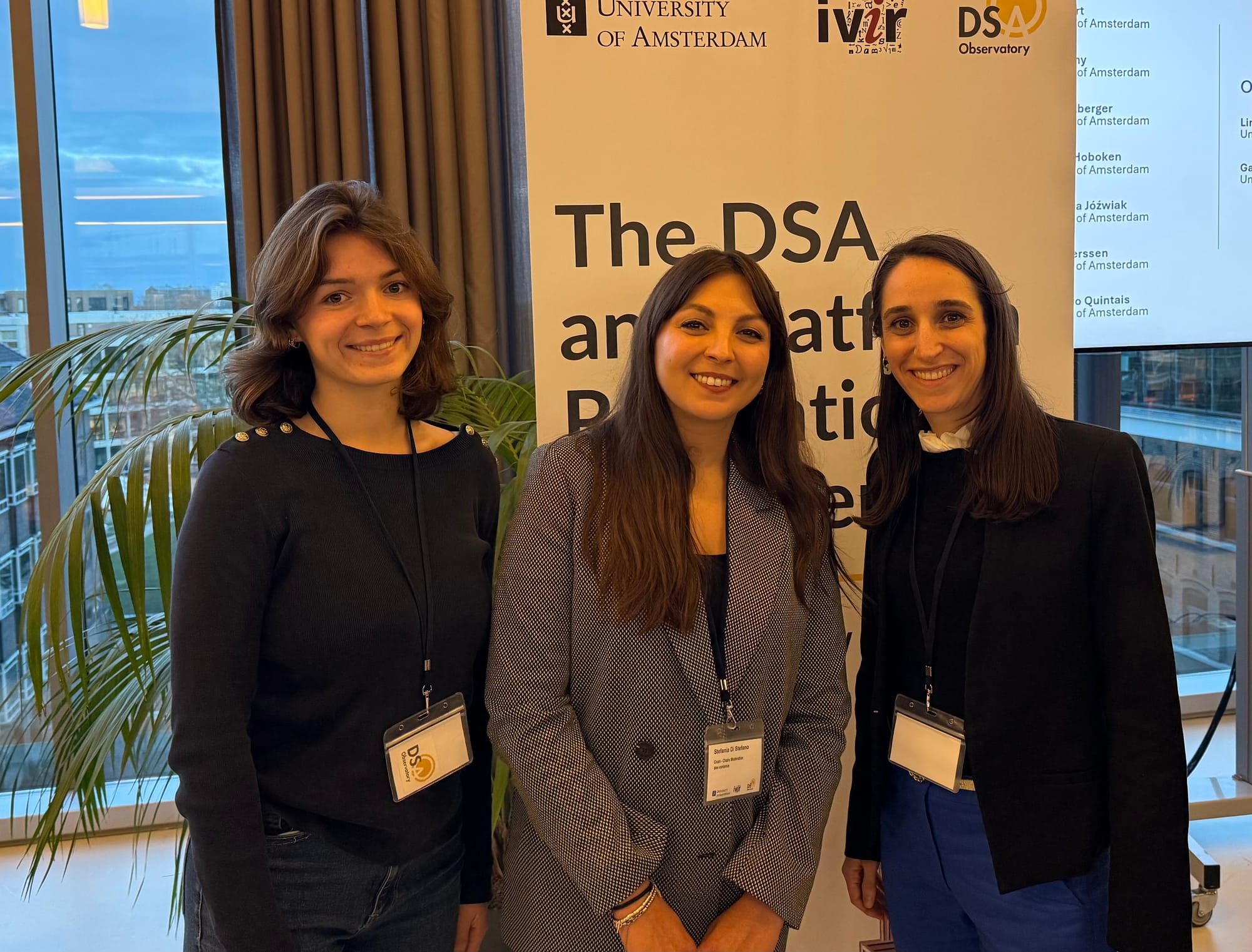

The Chair's team at the Conference and the DSA Observatory organizers' team
Our slides: